
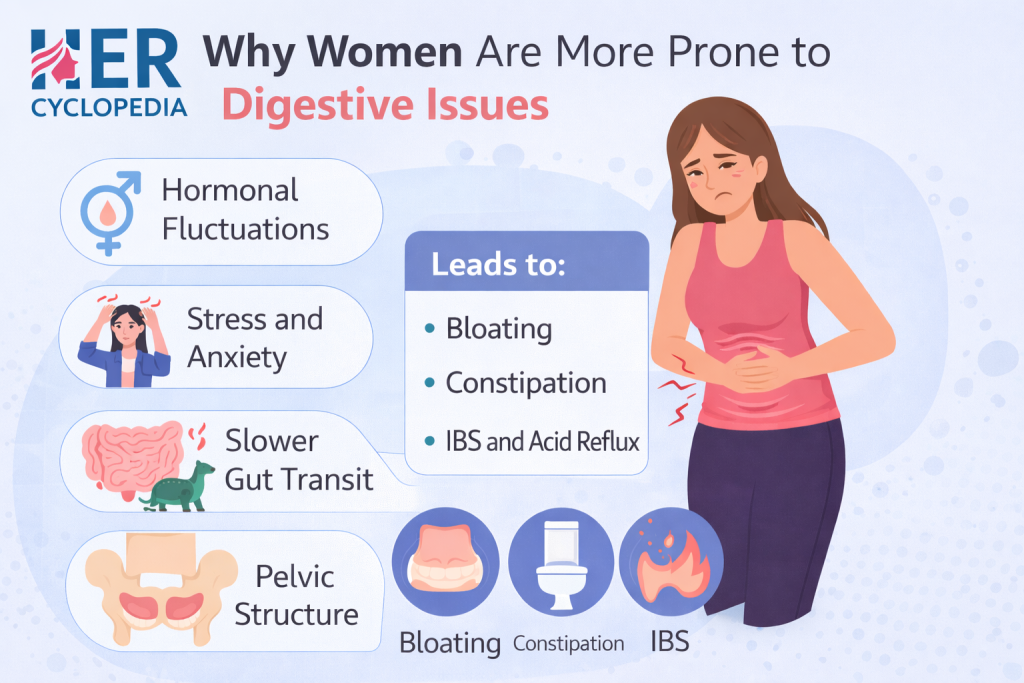
Digestive health is an essential part of overall well being, yet many women experience digestive problems more frequently than men. From bloating, constipation, and heartburn to irritable bowel symptoms, these issues can significantly impact daily life.
Biological differences, hormonal fluctuations, lifestyle factors, and stress all contribute to digestive challenges in women. Understanding why women are more prone to digestive issues allows for early intervention, better management, and improved quality of life.
This blog explains the reasons behind women’s digestive problems, common symptoms, and practical steps for better gut health.
How Women’s Digestive System Differs
Women’s digestive system functions similarly to men’s, but hormonal variations and physiological differences influence how the gut responds to stress, food, and bodily changes.
Key Differences
- Slower gastrointestinal transit time, leading to constipation
- Greater sensitivity to pain and gut discomfort
- Hormonal fluctuations affecting digestion and motility
- Increased prevalence of certain gut disorders
These differences explain why women often experience digestive issues more intensely or frequently.
Hormonal Influence on Digestion
Hormones, particularly estrogen and progesterone, play a significant role in women’s digestive health.
Menstrual Cycle Effects
- Progesterone slows down gut movement, causing bloating and constipation before periods.
- Estrogen fluctuations can trigger nausea, cramps, or diarrhea in sensitive individuals.
Pregnancy
- Hormonal changes relax intestinal muscles, leading to slower digestion and constipation.
- Increased pressure on the stomach and intestines can cause heartburn or reflux.
Menopause
- Declining estrogen levels affect gut motility and microbiome balance.
- Increased risk of bloating, indigestion, and irritable bowel symptoms.
Common Digestive Issues in Women
Bloating and Gas
Hormonal changes, diet, and slow gut transit can cause abdominal bloating and excess gas.
Constipation
Women are more likely to experience constipation due to slower intestinal movement and hormonal influences.
Heartburn and Acid Reflux
Relaxed esophageal muscles during pregnancy or after meals can lead to acid reflux and discomfort.
Irritable Bowel Syndrome (IBS)
IBS is more common in women, characterized by abdominal pain, bloating, and alternating constipation and diarrhea.
Food Sensitivities
Women may be more prone to lactose intolerance, gluten sensitivity, or other digestive intolerances.
Lifestyle Factors Affecting Women’s Digestion
Lifestyle habits can worsen or trigger digestive issues.
- Skipping meals or irregular eating patterns
- High intake of processed or fatty foods
- Low fiber and hydration intake
- Stress, anxiety, or lack of sleep
- Sedentary lifestyle
Small lifestyle adjustments can significantly improve digestive health.
How to Support Digestive Health in Women
Dietary Tips
- Eat a balanced diet rich in fruits, vegetables, and whole grains
- Include probiotics like yogurt, kefir, or fermented foods
- Drink adequate water throughout the day
- Limit processed foods, caffeine, and high sugar intake
Physical Activity
- Regular exercise stimulates gut motility and reduces bloating
- Yoga and gentle stretches help relieve constipation
Stress Management
- Practice mindfulness, meditation, or deep breathing
- Adequate sleep supports hormonal balance and gut function
Medical Care
- Consult a gastroenterologist if symptoms are persistent
- Rule out infections, hormonal disorders, or inflammatory bowel diseases
- Regular screenings for women over 40, including colon health checks
When to See a Doctor
Seek medical advice if you experience:
- Persistent bloating, pain, or discomfort
- Unexplained constipation or diarrhea
- Heartburn that does not respond to lifestyle changes
- Blood in stool or significant weight changes
- Symptoms affecting daily life and sleep
Early intervention helps prevent complications and ensures effective treatment.
Conclusion
Women are more prone to digestive issues due to hormonal fluctuations, physiological differences, and lifestyle factors. Awareness and early management are key to maintaining gut health and overall well being.
At Hercyclopedia, our gastroenterology specialists provide comprehensive evaluation, personalised dietary guidance, and advanced treatment options to help women maintain optimal digestive health at every stage of life.
Frequently Asked Questions
Hormonal changes during the menstrual cycle slow gut movement and increase water retention, causing bloating.
Yes. Stress impacts gut motility, hormone balance, and microbiome health, contributing to digestive issues.
Yes. Hormonal changes and pressure on the digestive tract can cause constipation, bloating, and heartburn.
Adequate fiber intake, hydration, regular exercise, and routine bowel habits help prevent constipation.
If digestive symptoms are persistent, severe, or affect daily life, consultation is recommended for proper evaluation.