Most people’s relationship with gynaecological care follows the same pattern: go once a year if that, and only book an actual appointment when something feels wrong enough to worry about. That reactive approach is common, but it means a lot of things — the ones that are easiest to treat early — get caught late instead. Here’s what routine care actually covers, what each visit is for, and which symptoms are worth a call rather than a “let’s see if it goes away.”
From the team at HerCyclopedia, where we write about women’s health the way we’d want it explained to us.
The Annual Exam Covers More Than People Expect
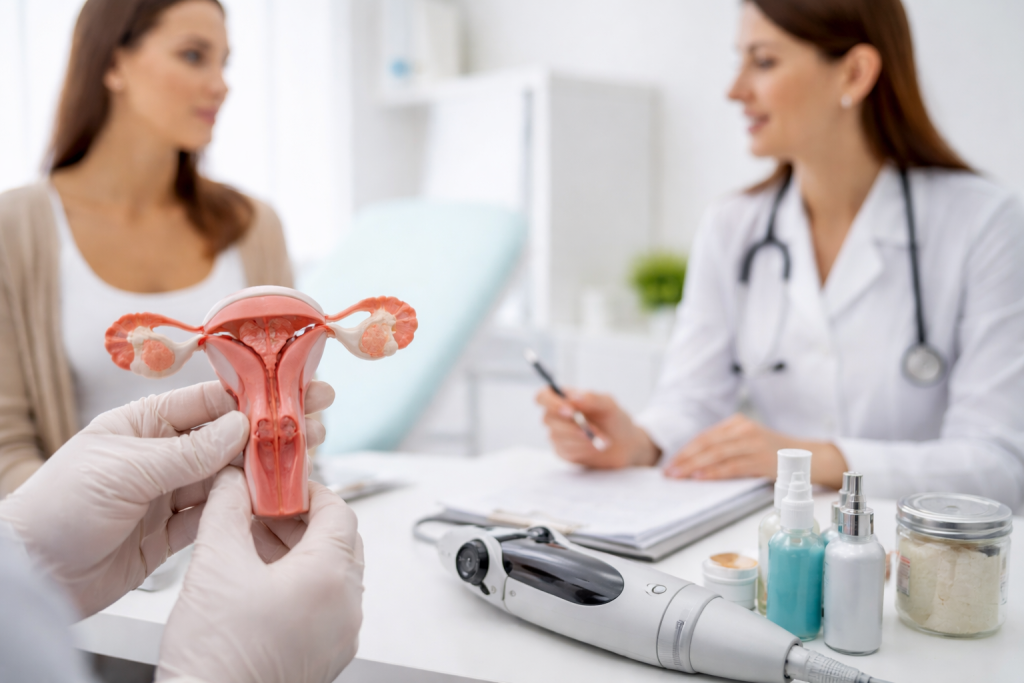
A routine wellness visit usually includes a pelvic exam, a breast exam, and depending on your age cervical cancer screening. Here’s where the guidelines get specific and often misunderstood: Pap smears start at 21, regardless of sexual activity, and run every three years through 29. From 30 to 65, most guidelines shift to every five years if you’re co-testing with HPV, or you can stick with a Pap alone every three. After 65, if your screening history has been consistently normal, most people can stop altogether. None of this is one-size-fits-all a history of abnormal results or a compromised immune system changes the schedule.
This visit is also the easiest time to bring up anything you’ve been putting off mentioning irregular spotting, pain during sex, a lump you noticed in the shower. Doctors expect these questions; they’re not going to be the strangest thing they’ve heard that week.
Contraception Isn’t a One-Time Decision
Choosing a birth control method isn’t just “pick one and you’re set for life” what works well at 22 might not fit at 34, especially if you’ve had a baby, developed migraines with aura (which rules out estrogen-containing methods), or your priorities around future fertility have shifted. IUDs (hormonal or copper) last 3 to 12 years depending on the type and are the most effective reversible option available, but they’re not the right fit for everyone some people have heavier periods on copper IUDs, for instance. The pill still works well for people who want a lower-maintenance-to-insert option and want a period they can predict.
If you’re not currently on anything and are tracking irregular cycles, that’s worth raising too cycle irregularity by itself isn’t automatically a contraception conversation, but it’s related.
Hormonal Symptoms Are Common That Doesn’t Mean They Should Be Ignored
Painful periods (dysmenorrhea) affect most people at some point, but there’s a real difference between typical cramping and pain that keeps you from going to work or school. That level of pain is one of the more consistent early signs of endometriosis, a condition that on average takes 7 to 10 years to diagnose from first symptom — largely because people are told the pain is normal for years before anyone investigates further.
PCOS is another one that gets missed for a long time, partly because it doesn’t look the same in everyone. Irregular periods, acne, and excess hair growth are the more commonly known signs, but weight changes and difficulty conceiving can also be part of the picture. Diagnosis usually involves blood work to check hormone levels and often an ultrasound to look at the ovaries.
Infections and Pelvic Pain Deserve a Same-Week Appointment, Not a Wait
Unusual discharge, persistent itching, or a smell that’s new for you are worth getting checked rather than self-treating with an over-the-counter product, especially if it’s the first time you’ve had these symptoms. Bacterial vaginosis, yeast infections, and STIs like trichomoniasis can look similar on the surface but need different treatments guessing wrong means the symptoms just come back.
Pelvic inflammatory disease is the one that carries real urgency. Left untreated, it can cause scarring that affects fertility later, so pelvic pain paired with fever, unusual discharge, or pain during sex is a same-week-appointment situation, not a monitor-it-for-a-month one.
Perimenopause Often Starts Earlier Than People Expect
Perimenopause the transition leading up to menopause can start in your late 30s or 40s and last anywhere from a few months to over a decade before periods stop completely. Hot flashes get most of the attention, but sleep disruption, mood changes, and shifts in cycle length are often the first signs, sometimes years before hot flashes show up at all.
Vaginal dryness and bone density loss tend to get less airtime but matter more long-term estrogen decline affects bone density directly, which is part of why bone density screening becomes a standard recommendation around menopause, not just for people with a family history of osteoporosis.
When to Book an Appointment, Not Wait for Your Annual
You don’t need to justify a visit with a “big enough” reason, but these are the ones worth acting on sooner:
- Periods that have become noticeably heavier, more painful, or irregular compared to your usual pattern
- Bleeding between periods, after sex, or any bleeding after menopause has started
- Pelvic pain that’s new, worsening, or interfering with daily life
- Trying to conceive for a year without success (or 6 months if you’re over 35)
- New or worsening symptoms during a suspected perimenopause transition
Frequently Asked Questions
What actually happens at a first gynaecology visit?
Mostly conversation. Expect questions about your period history, sexual activity, contraception, and any symptoms, before any exam happens. If a pelvic exam is needed, your provider should explain each step before doing it you can ask them to stop at any point.
How often do I really need a Pap smear?
Every 3 years from 21 to 29, then every 3 to 5 years from 30 to 65 depending on whether you’re also doing HPV co-testing. Your specific history can move this timeline earlier or later ask your provider what applies to you.
Is period pain that bad actually normal?
Mild cramping, yes. Pain that stops you from going about your day, no and it’s one of the more overlooked early signs of endometriosis specifically because so many people are told to expect it.
Can I go to a gynaecologist appointment while on my period?
Yes — most exams can still be done, and if something feels urgent, it’s better to go than to wait until your period ends.
What actually counts as abnormal bleeding versus a weird period?
Bleeding between periods, after sex, or any bleeding once menopause has started isn’t a “weird period” it’s abnormal bleeding, and it’s worth getting checked regardless of how light it is.