
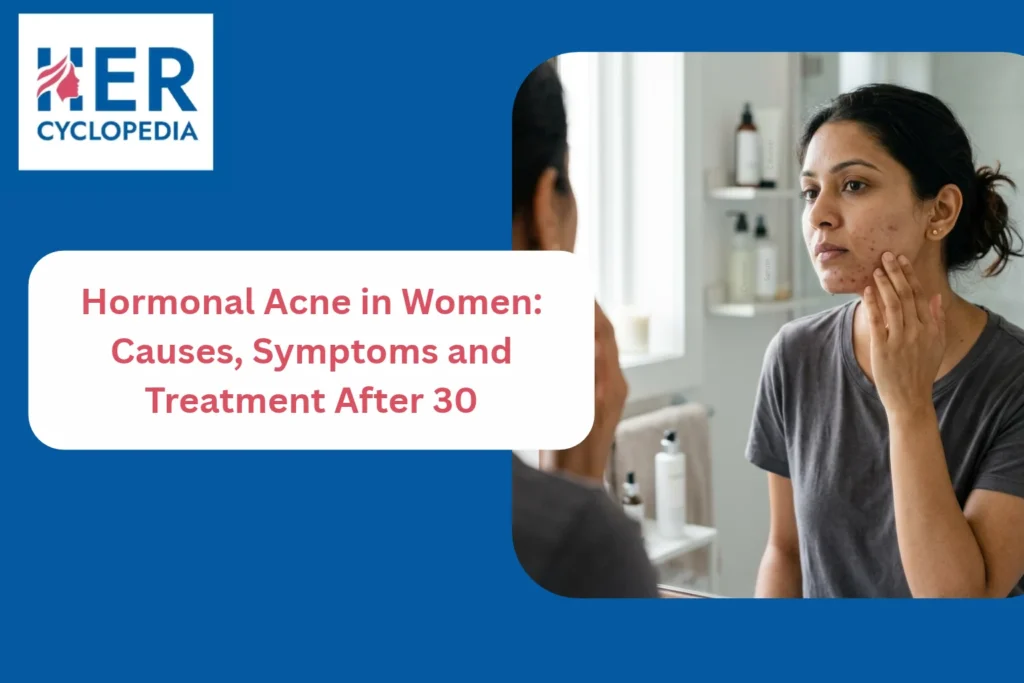
Have you started noticing pimples along your jawline, chin or cheeks even though your teenage years are long behind you? Hormonal acne in women can appear in your 30s and beyond, sometimes after years of relatively clear skin. Recurring breakouts before your period, deep and tender pimples, and blemishes that take time to heal can be frustrating, especially when your usual skincare routine no longer seems to work.
So, why am I getting hormonal acne in my 30s? Hormonal fluctuations may contribute to these breakouts, but they are not the only possible cause. Stress, skincare products, certain medications and medical conditions can also play a role.
Understanding the possible hormonal acne causes can help you make informed decisions about your skincare and treatment. This article explains what hormonal acne looks like, why it may develop after 30, how diet and lifestyle can affect your skin, and which treatment options you can discuss with a healthcare professional.
What Is Hormonal Acne in Women?
Hormonal acne is acne that develops or worsens partly because of changes in hormone activity. Androgens, including testosterone, can stimulate the sebaceous glands to produce more sebum, the natural oil that protects your skin. When excess oil combines with dead skin cells and inflammation, pores can become blocked, allowing pimples to develop.
Although acne is commonly associated with puberty, adult acne can continue from adolescence or appear for the first time in adulthood. Hormonal changes linked to the menstrual cycle, pregnancy and perimenopause may influence breakouts. Certain medical conditions, including polycystic ovary syndrome (PCOS), can also contribute.
However, not every woman with adult acne has a hormonal imbalance. Some women have skin that responds more strongly to normal hormone levels, while others experience breakouts because of several contributing factors.
What Does Hormonal Acne Look Like?
Hormonal acne can appear as red, inflamed pimples, whiteheads, blackheads or deep, tender lumps beneath the skin. Some women notice that their skin becomes oilier or that breakouts repeatedly develop in the same areas. Inflammatory pimples may take longer to settle and can leave dark marks or scars.
Another common pattern is hormonal acne before period. Breakouts may become more noticeable in the days leading up to menstruation and improve after the period begins. Tracking these changes over a few months may help you recognise a pattern, although the timing alone cannot confirm that hormones are responsible.
Where Does Hormonal Acne Usually Appear?
Hormonal acne often affects the lower face, particularly the chin and jawline. However, hormonal acne on cheeks is also possible. Breakouts may develop on the forehead, chest, shoulders and back.
The location of acne alone cannot establish its cause. For example, acne on jawline female is a common search phrase, but jawline breakouts do not automatically indicate a hormonal imbalance. A dermatologist can assess the appearance of your acne, medical history and other symptoms to identify possible triggers.
What Causes Hormonal Acne in Women After 30?
If you are wondering what causes hormonal acne in women after 30, the answer may involve several factors rather than one specific trigger. Changes in hormone activity, menstrual-cycle patterns, stress, skincare products and underlying health conditions can all contribute to adult breakouts.
Hormonal Fluctuations and Androgens
Androgens can increase sebum production, making the skin oilier and potentially contributing to blocked pores. Even when hormone levels fall within the usual range, some women’s skin may be more sensitive to their effects.
Changes in hormone activity can therefore contribute to excess oil, inflammation and recurring pimples. However, hormonal acne does not always mean that blood hormone levels are abnormal. A healthcare professional can determine whether further assessment is necessary based on your symptoms.
Menstrual Cycles and Premenstrual Breakouts
Some women notice that pimples appear or become more inflamed in the days before their period. These recurring episodes may be associated with normal hormonal fluctuations during the menstrual cycle.
If you experience hormonal acne before period, tracking your cycle alongside your breakouts can help you identify whether there is a recurring pattern. However, painful or persistent acne should not be ignored simply because it appears at a particular time of the month. Appropriate treatment can help reduce inflammation and prevent scarring.
Stress, Skincare Products and Other Adult Acne Causes
Stress may aggravate existing acne, although it does not directly explain every breakout. Heavy skincare products, certain medications and an individual tendency to develop acne can also contribute to adult acne causes.
If your breakouts began after changing your skincare routine, review the products you use. Choose products labelled non-comedogenic, remove makeup gently before bed and avoid scrubbing or squeezing inflamed pimples. If you suspect a medication is contributing to your acne, discuss it with your healthcare professional rather than stopping the medicine yourself.
Can PCOS Cause Hormonal Acne?
Polycystic ovary syndrome, commonly known as PCOS, can cause hormonal changes that contribute to acne. Other possible symptoms include irregular periods, excess facial or body hair and thinning hair on the scalp.
Acne alone does not mean you have PCOS. However, if persistent acne occurs alongside these symptoms, consider speaking with a gynaecologist or another qualified healthcare professional. An assessment can help determine whether further investigations or treatment are appropriate.
What Are the Common Symptoms of Hormonal Acne?
The symptoms of hormonal acne can range from occasional pimples to deep, painful breakouts. Recognising your skin’s pattern may help you explain your concerns during a medical appointment.
Acne on the Jawline, Chin and Cheeks
Some women experience recurring pimples around the chin and jawline, particularly before menstruation. Others develop inflamed spots across their cheeks or experience acne in several areas at once. This is why searches for hormonal acne on cheeks and acne on jawline female are common among women looking for answers about adult breakouts.
However, acne location is only one part of the picture. The type of pimples, how frequently they appear, their relationship to the menstrual cycle and the presence of other symptoms are also important when assessing possible hormonal causes.
Deep, Tender Pimples and Recurring Breakouts
Hormonal acne may include deeper inflammatory spots that feel sore when touched. These blemishes can take longer to settle and may increase the risk of scarring, particularly if you repeatedly squeeze or pick them.
Painful nodules, recurring breakouts despite consistent skincare, dark marks and acne scars are reasons to seek medical advice. Sudden or severe acne also deserves assessment, especially when it develops alongside new menstrual changes or unusual hair growth.
Early treatment can help control inflammation and reduce the risk of long-lasting skin changes.
How to Treat Hormonal Acne in Women
The right hormonal acne treatment depends on the severity of your acne, your skin type, your medical history and whether you are pregnant, planning pregnancy or breastfeeding. There is no single treatment that works for every woman, so it is important to choose an approach suited to your needs.
Establish a Gentle Skincare Routine
A simple skincare routine can help manage clogged pores while protecting the skin barrier. In the morning, wash your face with a gentle cleanser, apply a non-comedogenic moisturiser and finish with broad-spectrum sunscreen with SPF 30 or higher.
In the evening, cleanse your skin to remove oil, sunscreen and makeup. Apply an acne treatment recommended by a healthcare professional, followed by moisturiser to reduce dryness and irritation.
Avoid introducing several active ingredients at once. Strong exfoliants, harsh scrubs and excessive cleansing can irritate your skin and make inflammation worse. Consistency is generally more helpful than repeatedly changing products in search of a quick solution.
Medical Treatments a Dermatologist May Recommend
When skincare alone is not enough, a dermatologist may recommend prescription or over-the-counter treatments based on your acne type and medical history.
Benzoyl peroxide helps reduce acne-causing bacteria and inflammation. Topical retinoids help prevent clogged pores and are used to treat certain forms of acne. Azelaic acid can help manage acne and some dark marks left after pimples heal.
For selected women, hormonal medicines such as certain combined oral contraceptives or spironolactone may be considered after a clinician assesses their suitability. Severe or persistent acne may require other prescription treatments.
Some acne medicines are unsuitable during pregnancy or when trying to conceive. Topical retinoids and oral retinoids require particular caution, and oral retinoids must not be used during pregnancy. Always consult a qualified healthcare professional before starting prescription medication.
When Should You Consult a Gynaecologist?
A dermatologist is usually the most appropriate specialist for diagnosing acne and recommending skin treatment. A gynaecologist may help assess possible hormonal conditions when acne occurs alongside irregular periods, unusual hair growth or other symptoms that may suggest PCOS.
Depending on your symptoms, you may benefit from consulting both specialists. Identifying an underlying condition, when present, can help guide your overall treatment plan.
For more information about women’s reproductive and hormonal health, explore the HerCyclopedia Gynaecology department.
Can Diet and Lifestyle Affect Hormonal Acne?
Your daily habits may influence your skin, but diet is not the sole cause of hormonal acne. A balanced approach is more useful than following strict food rules or relying on supplements that promise to clear your skin.
What to Know About Hormonal Acne Diet
Research suggests that a high-glycaemic diet may worsen acne in some people. Foods that can raise blood glucose quickly include sugary drinks, sweets, refined carbohydrates such as white bread and some highly processed snack foods.
Rather than eliminating entire food groups, focus on balanced meals that include vegetables, whole grains, protein, healthy fats and fibre. These choices can support general health without making your diet unnecessarily restrictive.
Evidence linking dairy products with acne is mixed, and the relationship may vary between individuals. If you suspect a particular food triggers your breakouts, track your symptoms and discuss significant dietary changes with a registered dietitian or healthcare professional. A specific hormonal acne diet cannot guarantee clear skin, and dietary changes should not replace appropriate medical treatment.
Sleep, Stress Management and Daily Habits
Stress and poor sleep may aggravate acne for some women, although they do not explain every case. Consistent sleep, regular physical activity and practical stress-management habits can support overall wellbeing.
Keeping a simple diary of your breakouts, menstrual cycle, new skincare products, medicines, sleep and stress levels may help you recognise patterns. This information can be useful when discussing your symptoms with a dermatologist or gynaecologist.
How to Get Rid of Hormonal Acne Without Damaging Your Skin
When breakouts keep returning, it can be tempting to try stronger cleansers, harsh scrubs or multiple home remedies. These approaches can irritate the skin and worsen inflammation rather than helping it heal.
If you want to know how to get rid of hormonal acne, start by avoiding habits that may damage your skin. Do not squeeze pimples, as picking can increase inflammation and the risk of dark marks and scarring. Choose gentle cleansers, non-comedogenic moisturisers and suitable sunscreen instead of aggressive exfoliating products.
Introduce acne treatments gradually and follow the product instructions or your clinician’s advice. Many acne treatments need around six to eight weeks before early improvement becomes noticeable, although results vary. Some treatments take longer to produce meaningful changes.
There is no guaranteed overnight solution for hormonal acne. If your breakouts are painful, deep, persistent or leaving scars, consult a dermatologist rather than repeatedly switching products or relying only on home remedies.
When Should You Seek Medical Advice for Adult Acne?
Occasional pimples may settle with gentle skincare, but persistent acne deserves attention, particularly when it affects your comfort, confidence or skin texture. Arrange a medical assessment if your acne is painful, deep, widespread, scarring or not improving with appropriate over-the-counter care.
You should also seek advice if acne appears suddenly or becomes severe, especially when accompanied by irregular or absent periods, new or increasing facial hair, or thinning hair on the scalp. These symptoms do not automatically indicate PCOS or another hormonal condition, but they may warrant further assessment.
A clinician can review your medical history and symptoms and decide whether an examination, blood tests or other investigations are needed. Early assessment can help you understand the likely cause and choose a suitable treatment plan.
Remember that acne is a common skin condition, not a personal failure. You do not need to tolerate painful breakouts or feel that you must manage them alone.
Frequently Asked Questions
Why am I getting hormonal acne in my 30s?
Hormonal fluctuations, skin sensitivity to androgens, stress, skincare products and other factors can contribute to adult acne. If breakouts begin suddenly or occur alongside irregular periods or unusual hair growth, seek medical advice to assess possible underlying causes.
What causes hormonal acne in women after 30?
Hormonal changes can increase oil production and contribute to blocked pores and inflammation. Menstrual-cycle changes and conditions such as PCOS may play a role in some women, but adult acne can also have non-hormonal causes.
How to treat hormonal acne in women?
Treatment may include a gentle skincare routine, suitable topical acne medicines and, when appropriate, prescription hormonal treatments. A dermatologist can recommend options based on your symptoms, medical history and pregnancy plans.
How to get rid of hormonal acne naturally?
Gentle cleansing, non-comedogenic skincare, balanced meals, adequate sleep and stress management may support skin health. These measures may not clear persistent hormonal acne on their own, so seek professional advice if breakouts continue, become painful or cause scarring.
Does acne on the jawline always mean a hormonal imbalance?
No. Although hormonal acne can affect the jawline and chin, acne in these areas does not confirm a hormonal imbalance. A clinician will consider the type of acne, your medical history and any other symptoms before identifying possible causes.
Can hormonal acne before a period be normal?
Some women experience recurring breakouts before menstruation because of normal hormonal fluctuations. If these breakouts are painful, persistent or leave scars, a dermatologist can help you explore appropriate treatment options.
Can diet changes clear hormonal acne?
Diet changes may help some people, particularly when their eating patterns include a high proportion of high-glycaemic foods. However, diet alone cannot reliably clear hormonal acne, and restrictive diets are not necessary for everyone.
Should I see a dermatologist or gynaecologist for hormonal acne?
A dermatologist is usually the best starting point for diagnosing and treating acne. A gynaecologist may also be helpful if you have irregular periods, excess facial hair or other symptoms that suggest an underlying hormonal condition.
Conclusion: Take the Right Steps Towards Clearer Skin
Experiencing hormonal acne after 30 can be frustrating, especially when breakouts keep returning despite your skincare efforts. Understanding the possible causes is the first step towards finding an approach that works for your skin.
Hormonal fluctuations, menstrual-cycle changes, stress, skincare products and certain medical conditions may contribute to adult acne. A gentle skincare routine, balanced nutrition and consistent habits can support skin health, while persistent or painful breakouts may require medical treatment.
Pay attention to recurring symptoms, avoid harsh home remedies and seek professional advice when acne affects your comfort or leaves scars. With an appropriate treatment plan, you can work towards healthier skin without relying on quick fixes or unnecessary restrictions.
For more information about women’s reproductive and hormonal health, visit HerCyclopedia or explore its Gynaecology department for more women’s health information.
Medical Disclaimer
This article is for educational purposes only and does not replace professional medical advice, diagnosis or treatment. Consult a qualified healthcare professional for persistent acne or concerns about hormonal health.
