
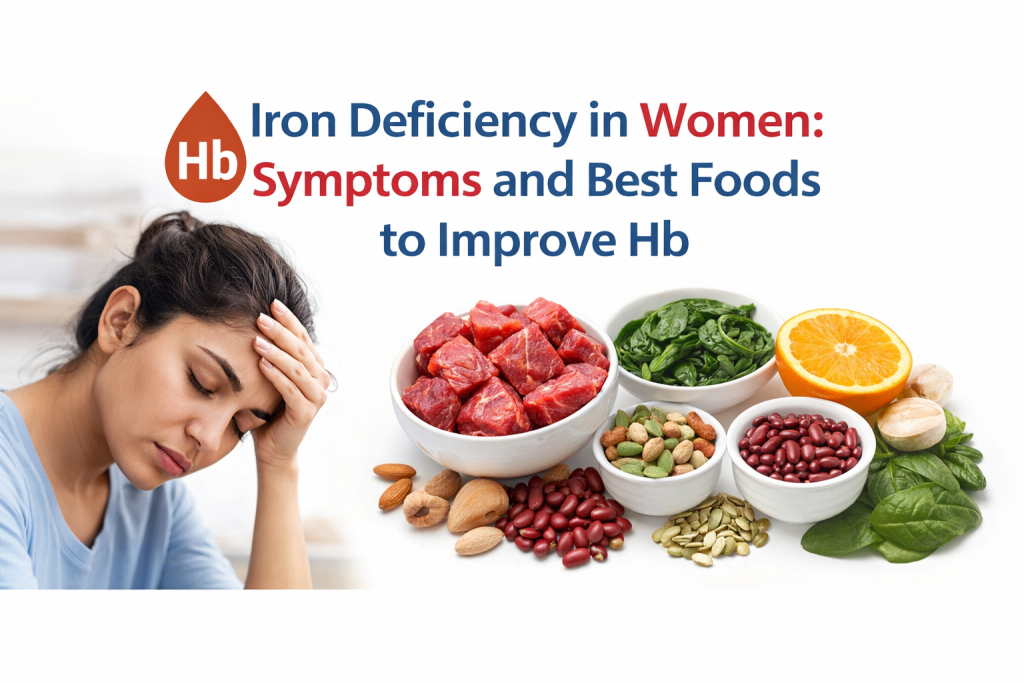
Iron deficiency is one of the most common nutritional deficiencies affecting women, especially during reproductive years. Blood loss during menstruation, increased iron needs during pregnancy, and dietary gaps can significantly reduce haemoglobin levels, leading to fatigue and other health concerns.
Many women live with low haemoglobin without realising it, often mistaking symptoms for stress or exhaustion. Understanding iron deficiency early and making the right dietary and medical choices can help restore healthy haemoglobin levels and improve overall well being.
This blog explains iron deficiency in women, its symptoms, causes, and the best foods to improve Hb levels naturally.
What Is Iron Deficiency
Iron is an essential mineral required for producing haemoglobin, the protein in red blood cells that carries oxygen throughout the body. When iron intake or absorption is inadequate, haemoglobin levels drop, resulting in iron deficiency anaemia.
Women are more prone to iron deficiency due to monthly menstrual blood loss and increased requirements during pregnancy and breastfeeding.
Common Symptoms of Iron Deficiency in Women
Iron deficiency symptoms may develop gradually and vary in severity.
Physical Symptoms
- Constant fatigue and weakness
- Pale skin or pale inner eyelids
- Shortness of breath
- Dizziness or light headedness
- Cold hands and feet
- Headaches
Hair, Skin, and Nail Changes
- Hair fall or thinning
- Brittle or spoon shaped nails
- Dry skin
- Cracks at the corners of the mouth
Cognitive and Emotional Symptoms
- Poor concentration
- Irritability
- Low energy levels
- Reduced work performance
If you experience multiple symptoms, a blood test is needed to confirm low haemoglobin levels.
Causes of Iron Deficiency in Women
Several factors can contribute to iron deficiency.
Menstrual Blood Loss
Heavy or prolonged periods are a leading cause of low iron levels in women.
Poor Dietary Intake
Insufficient intake of iron rich foods, especially in vegetarian or restrictive diets.
Increased Iron Requirements
- Pregnancy
- Breastfeeding
- Adolescence
Poor Iron Absorption
- Digestive disorders
- Excessive tea or coffee consumption
- Certain medications
How Iron Deficiency Is Diagnosed
Iron deficiency is diagnosed through blood tests, including:
- Haemoglobin levels
- Serum ferritin
- Iron studies
Regular screening is important for women with heavy periods, pregnancy, or chronic fatigue.
Best Iron Rich Foods to Improve Hb Levels
Diet plays a key role in improving haemoglobin levels naturally.
Animal Based Iron Sources
These provide heme iron, which is easily absorbed.
- Lean red meat
- Liver
- Chicken
- Fish
- Eggs
Plant Based Iron Sources
These provide non heme iron and should be combined with vitamin C.
- Spinach and other leafy greens
- Lentils and beans
- Chickpeas
- Tofu
- Nuts and seeds
- Dates and raisins
- Whole grains
Vitamin C Rich Foods for Better Absorption
- Oranges and citrus fruits
- Guava
- Amla
- Tomatoes
- Bell peppers
Avoid consuming tea or coffee immediately after meals, as they reduce iron absorption.
Iron Supplements and Medical Treatment
In moderate to severe deficiency, dietary changes alone may not be enough.
Treatment Options
- Oral iron supplements
- Iron injections in severe cases
- Treating underlying causes like heavy menstrual bleeding
Iron supplements should always be taken under medical supervision to avoid side effects.
How Long Does It Take to Improve Hb Levels
With proper treatment and diet, haemoglobin levels usually begin to improve within four to six weeks. Complete replenishment of iron stores may take three to six months.
Regular follow up tests help track progress.
When Should You See a Doctor
Consult a doctor if you:
- Feel persistently tired or dizzy
- Have heavy menstrual bleeding
- Are pregnant or planning pregnancy
- Have low haemoglobin on blood tests
- Do not respond to dietary changes
Early intervention prevents complications and improves quality of life.
Conclusion
Iron deficiency in women is common but preventable and treatable. Recognising symptoms early, following a balanced iron rich diet, and seeking medical care when needed can significantly improve haemoglobin levels and overall health.
At Hercyclopedia, our women’s health specialists provide comprehensive evaluation, nutritional counselling, and personalised treatment plans to help women maintain healthy iron levels at every stage of life.
Frequently Asked Questions
Normal haemoglobin levels for women usually range between 12 and 15 grams per decilitre.
Yes. Low iron levels can contribute to hair thinning and increased hair fall.
Yes. Iron requirements increase significantly during pregnancy, making deficiency more common.
Mild deficiency can often be corrected with diet, but moderate to severe cases usually require supplements.
Women with symptoms or risk factors should check Hb levels at least once a year or as advised by their doctor.